Someone asks which chair is in your reel. Another person wants the headphones from last month’s setup. You remember the products, but finding the right version, current link, and original post takes time. Affiliate content becomes easier to manage when those pieces live in one record.
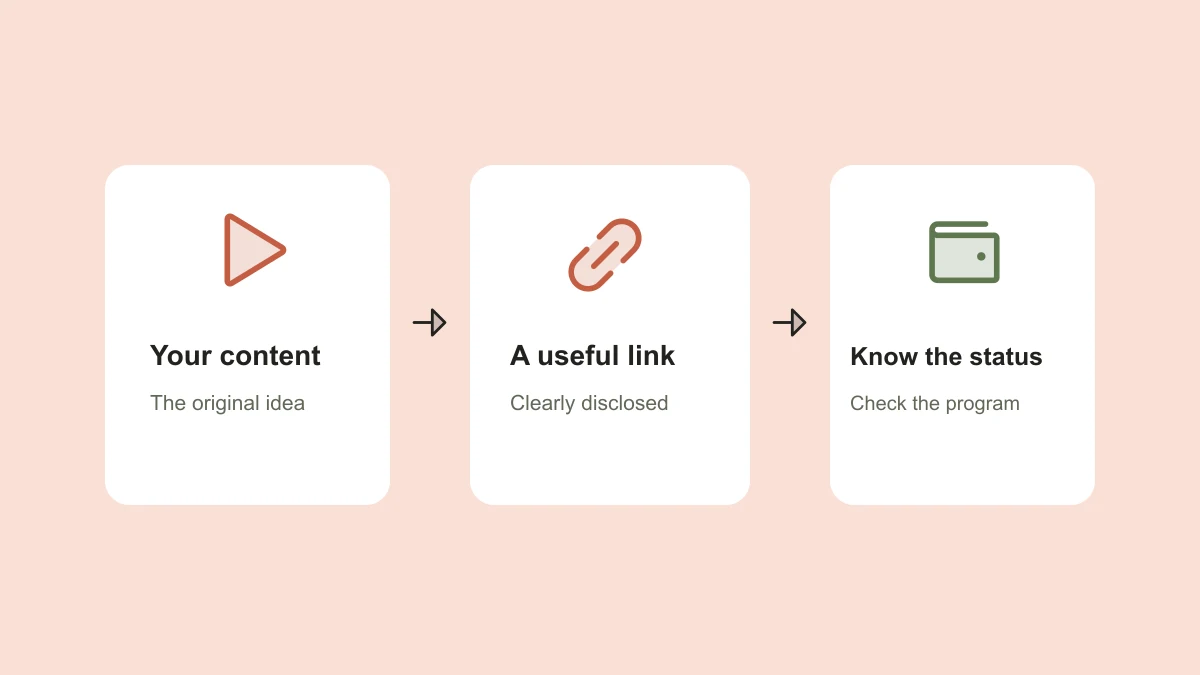
Start with the recommendation and the audience’s question. Then connect the content to a verified product page, an eligible affiliate link where one exists, and a clear disclosure. A tidy workflow can reduce repeated admin; it does not guarantee that a click earns a commission.
Create one record for the original recommendation
Save the original post URL, publication date, and the products you intended to recommend. For each product, include the manufacturer or merchant name, model or variant, and the source you used to verify it. This avoids sending a link to a newer version without realizing it differs from the video.
Record what you actually know about the item. If you used it, your experience belongs beside the recommendation. If you only researched it or received information from a brand, keep that distinction clear. Your internal notes should make an honest public answer easier to write.
Content: [original post URL]
Product: [name, model, and variant]
My relationship: [purchased, gifted, sponsored, or other]
Verified product page: [URL]
Affiliate program and link: [if available]
Allowed channels: [check program terms]
Disclosure location: [in the relevant content]
Last link check: [date]
Check whether the link fits the program and channel
Not every item has an affiliate program, and joining one does not mean every placement is permitted. Check the merchant or network’s current terms for social posts, direct messages, link pages, geographic availability, and any restrictions that affect how you share a recommendation.
Keep the program’s own link and reporting instructions with your record. Avoid assuming that a shortened URL, a redirected link, or a copied product URL will preserve attribution. If you cannot confirm the setup, use the program’s documentation or support before relying on it.
Make the relationship clear where people see the recommendation
The US Federal Trade Commission’s influencer guidance says material brand relationships should be disclosed clearly where people encounter the endorsement. It also explains why a disclosure hidden on a profile page, behind “more,” or only in a video description may be missed.
Use clear language that describes the relationship and place it with the relevant content. Check the rules that apply to your audience, location, platform, and affiliate program. This is a workflow guide, not a determination that a particular disclosure satisfies every jurisdiction.
Keep the path from content to product current
A useful review checks whether the link opens, whether it still points to the intended item, and whether the merchant page gives the audience the information they need. Record the date you checked it rather than writing “always up to date.”
If an item is unavailable, label any replacement as an alternative. Explain the difference that matters: a different size, material, generation, or included accessory. Silently swapping in another product can make an old recommendation confusing even when the replacement is a good option.
Separate interest from approved earnings
Use the program’s own reports to distinguish link activity, attributed orders, approved commission, and money paid out. Check the applicable attribution, return, approval, and payout terms. A purchase or a click should not be described as settled income before the program confirms it.
Review audience questions alongside those reports. If people repeatedly ask about sizing, compatibility, or which model appeared in the reel, clearer content may be more useful than adding more links. Keep the recommendation understandable even for someone who never makes a purchase.
What TapShift is exploring for creators
TapShift’s planned creator experience connects useful content with relevant shopping or booking options and affiliate attribution where supported. The aim is to reduce repeated link administration across categories, including electronics, style, home, food, and travel.
The creator program is not live. Supported merchants, attribution rules, commission sharing, and payout terms will be confirmed before launch. There is no earnings guarantee, and not every saved item will produce an affiliate opportunity. Creators can join the waitlist to hear about the first version.
Published by TapShift, a prelaunch project in India. Examples are illustrative. Planned product features are described as plans, and the practical steps can be used independently of TapShift. Send a correction or question.